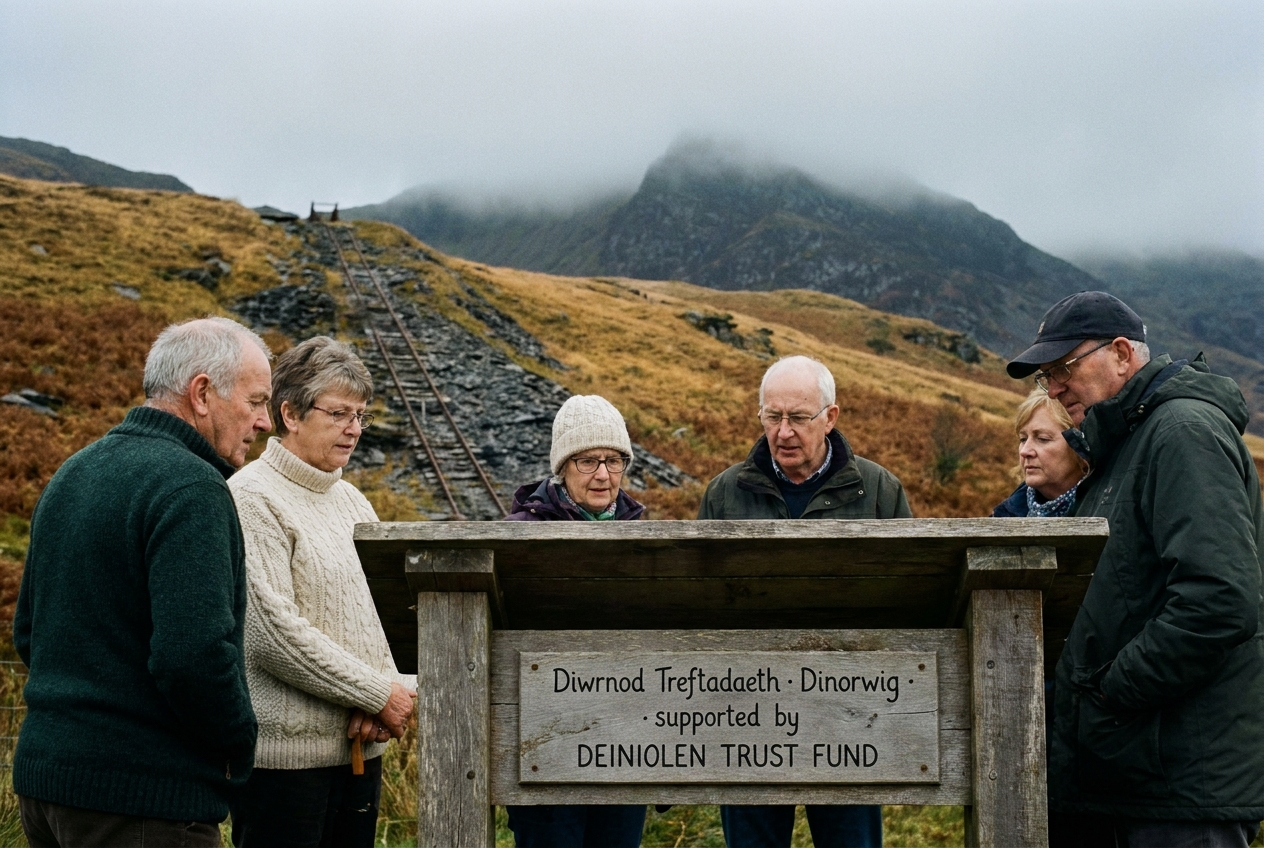
Ifor Williams was sixteen when he started at the Dinorwig quarry in 1973. The quarry closed less than a decade later, in 1969 for the lower workings and 1982 for the last of the upper galleries, depending on which old hand you ask. Ifor worked the lower face until he was thirty-two, then for two decades in the workshops of the Padarn railway. He has lived in the same end-terrace in Brynrefail since he was married in 1989. The application letter he wrote us, on a single side of A4 dated the eighth of August 2025, was the first time he had asked anything from the trust in the forty-five years it has been here.
What the letter asked for.
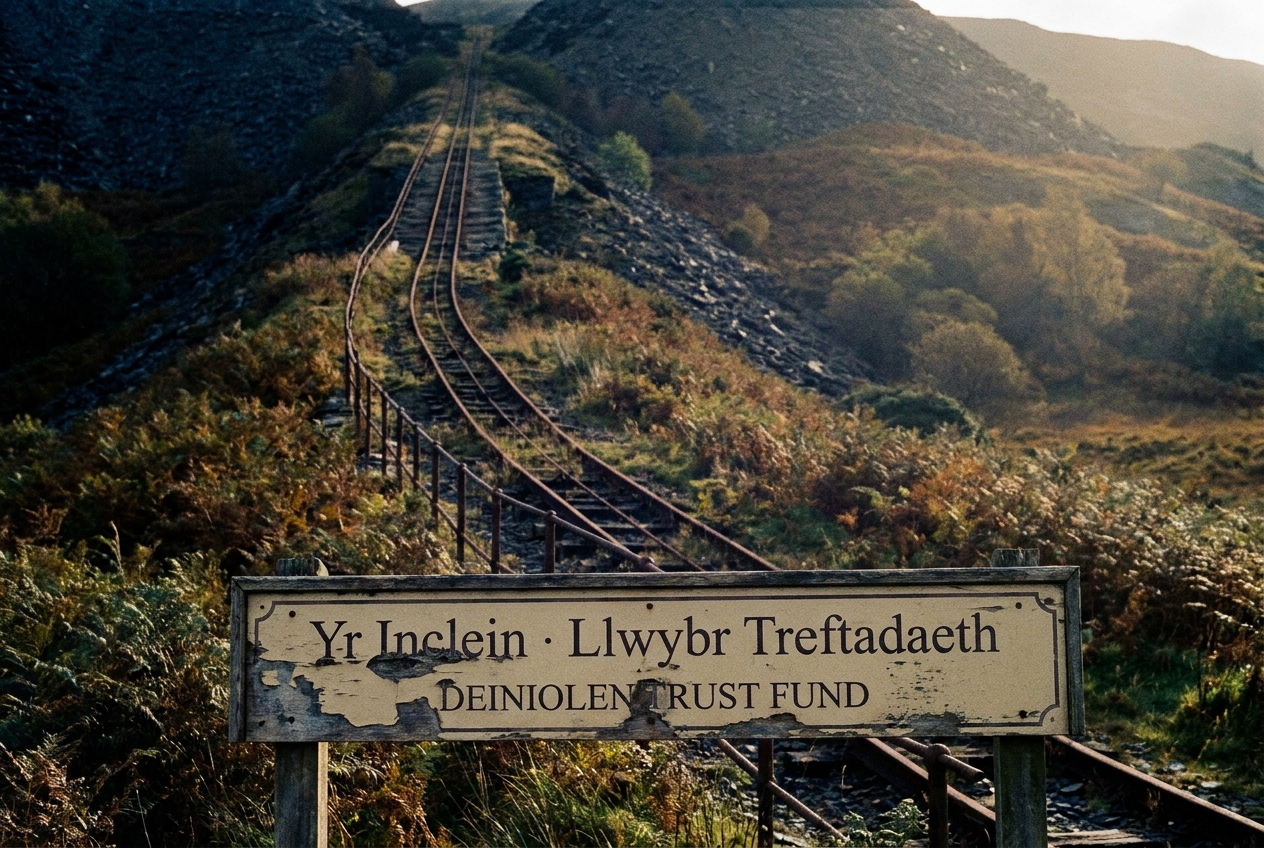
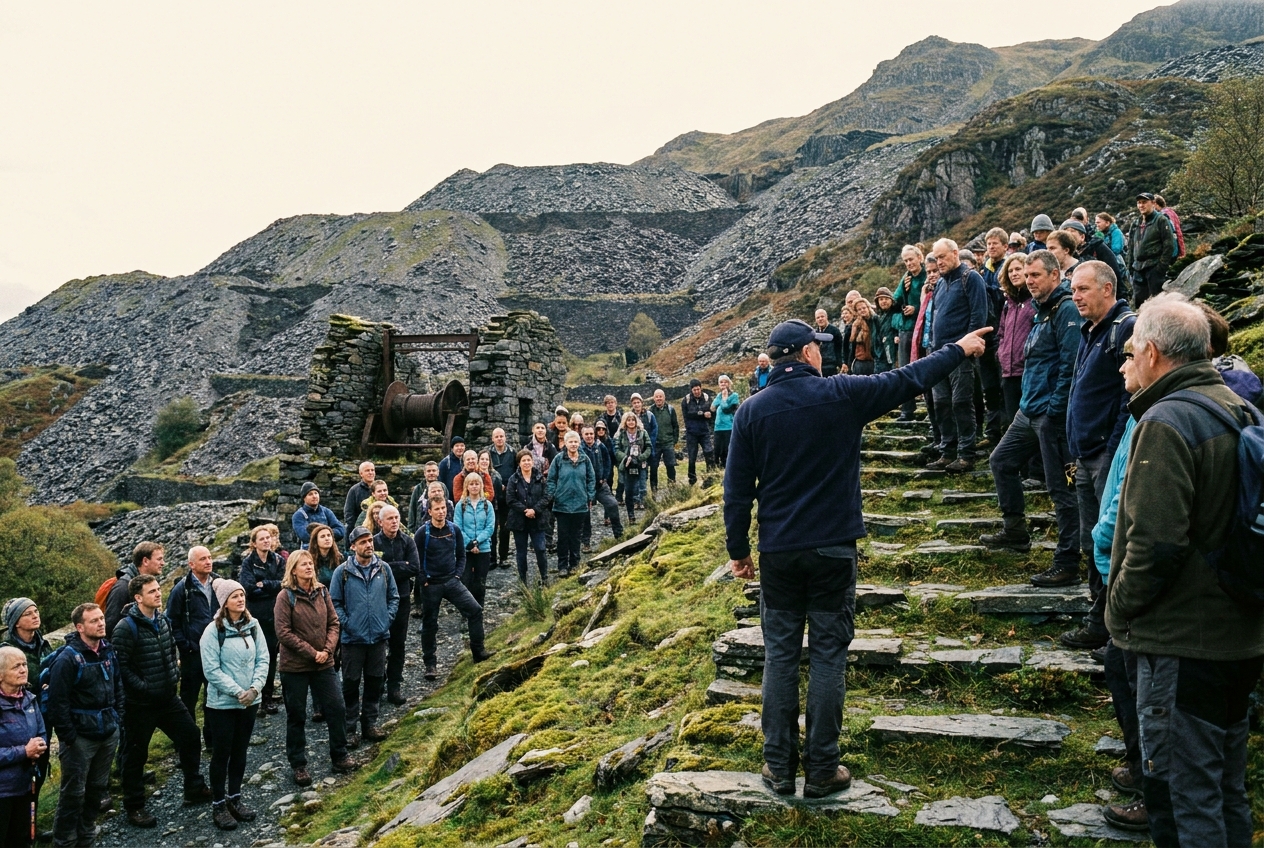
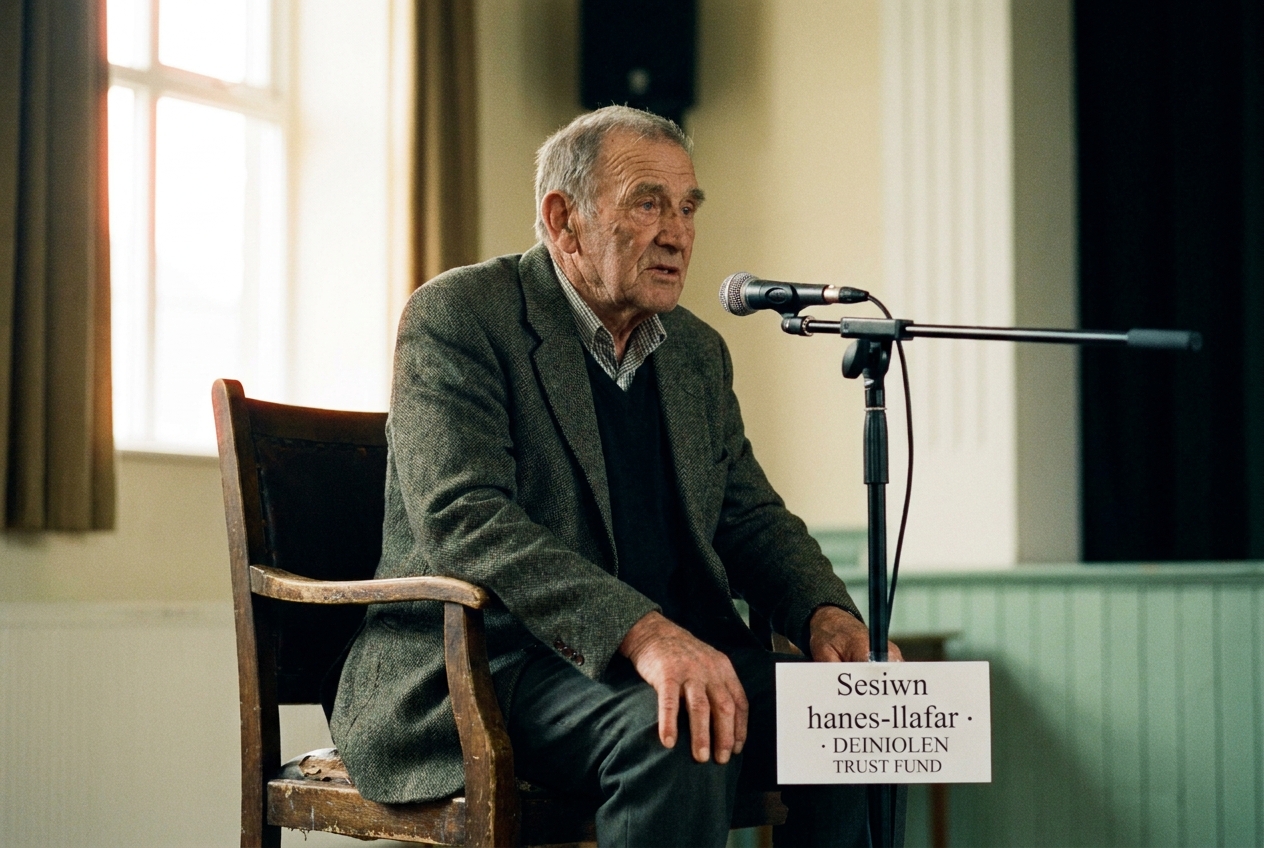
The letter asked for £250 toward a single afternoon at the foot of the old quarry incline above Deiniolen, the third Saturday in October. A guided walk in Welsh, taken by Ifor and two other retired quarrymen, with tea and bara brith afterwards at the Memorial Hall, and — this was the part Ifor was uncertain about — an oral-history session: six microphones and an audio recorder borrowed from Cymdeithas Hanes Deiniolen, six chairs in a half-circle, six men over seventy speaking on the record about a place they had not spoken about, except in fragments, for decades.
The trustees met on a Tuesday evening at the Memorial Hall. We agreed the £250 in full; we did not ask for a budget breakdown. Marina wrote the letter of confirmation on the Wednesday morning; Ifor had the cheque the following Tuesday. The walk happened, exactly as proposed, on Saturday the eighteenth of October 2025. Sixty-three people came.
The microphones were the easy bit. Asking the men to sit down with them was harder, and worth more, than the cheque we wrote. From the minutes of the November 2025 board meeting
What the afternoon did, and what it did not.
The afternoon did not save the slate-quarry heritage. The slate-quarry heritage is too large to be saved by one afternoon and too important to be entrusted to a single £250 grant; it sits, properly, with the National Slate Museum at Llanberis, the Dinorwig Quarry Hospital trust, and the long careful work of Cymdeithas Hanes Deiniolen. The afternoon did, however, do three smaller things that the village had not had before.
It got six men over seventy to sit down in front of microphones. Ifor; Dewi Pritchard, retired blacksmith; Hefin Roberts, retired bench-hand; the three brothers Tomos, Owain and Llion Davies, who had each worked different parts of the lower workings. Between them they spoke for two hours and eleven minutes on tape. The recordings are with Cymdeithas Hanes Deiniolen for cataloguing; they will be available to listen to, with permission, at the Memorial Hall reading room from January 2026.
It put a Welsh-language walk on the calendar for the first time in eleven years. The previous one had been in 2014, taken by Gwilym Llwyd, who died in 2018. Ifor has agreed to take the walk again in 2026, in May rather than October to avoid the autumn rain.
And it taught the four trustees that a £250 grant, given quickly, without a budget breakdown, to someone the village already trusts, will sometimes do more than a £2,500 grant given slowly. We will not pretend that this is always true; some grants need careful budgeting and a written outcome plan. But for this one, the trust’s job was to step out of the way.
What is next.
The 2026 walk is provisionally booked for the third Saturday in May, weather permitting. The trust has agreed in principle a £250 grant in 2026 on the same terms, with the addition of a small contribution toward printed handouts in Welsh and English. The oral-history archive will, if Cymdeithas Hanes agree, become a standing line in our Grantiau Cymunedol budget — perhaps £50 a year toward the cost of cataloguing and archive storage.
None of this is a five-year strategy. The trust does not have one. It is, simply, the next afternoon.
C Brian Price is the longest-serving of the four trustees of DEINIOLEN TRUST FUND.