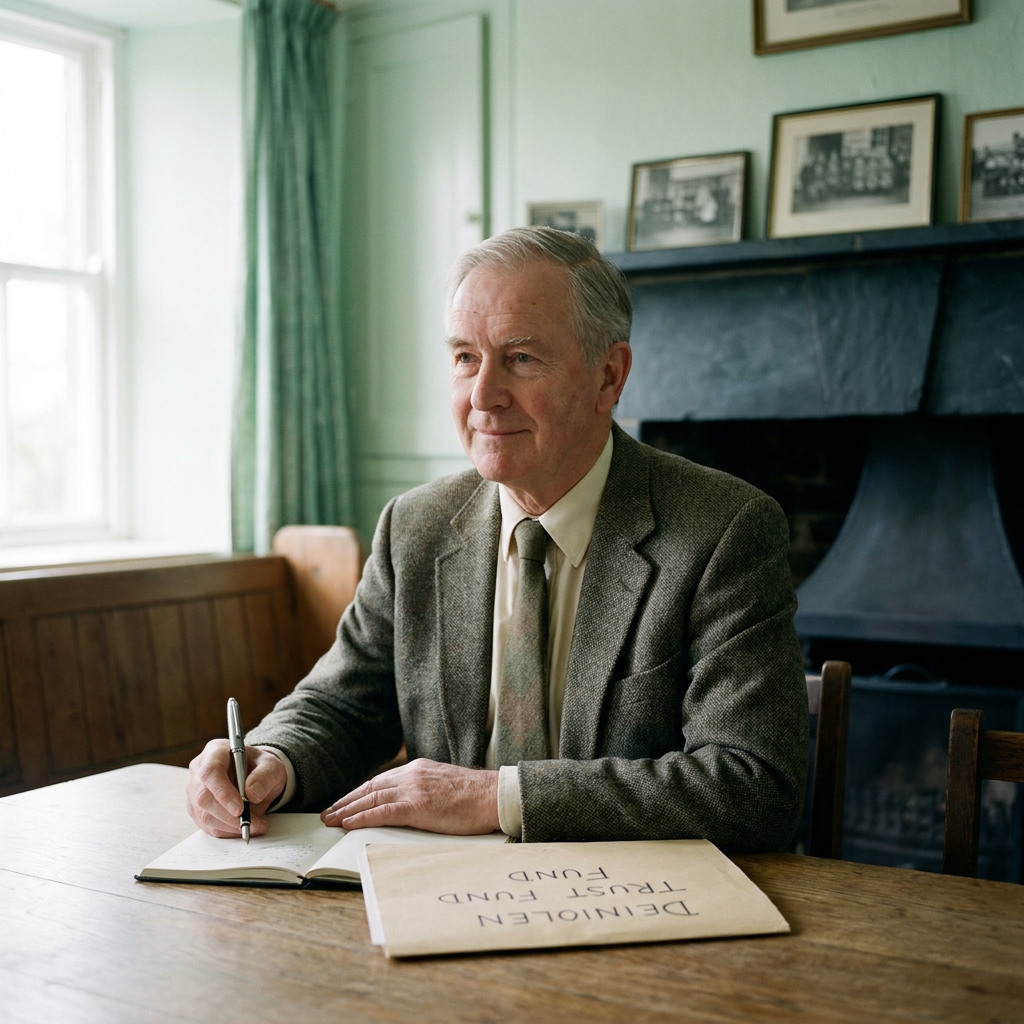
C Brian Price
Trustee [email protected]Reads applications under Grantiau Cymunedol and signs the Gift Aid declarations each spring.
 Deiniolen Trust Fund
DEINIOLEN TRUST FUND is governed by a Charity Commission Scheme sealed on 22 May 1980. Four trustees, one village, four small kinds of help. This page is the long way of explaining what fits on one side of A4.
The trust was not founded at a meeting; it was founded by a Scheme of the Charity Commission, sealed on the twenty-second of May 1980, that took several older village funds — chapel poor-boxes, a quarrymen’s welfare pot, a small reading-room legacy — and asked them to share a single board and a single bank account. The Scheme is two pages long and most of it is administrative. The part that matters fits in a single paragraph: the income of the consolidated fund is to be applied for the inhabitants of Deiniolen, in four ways, by trustees no fewer than four in number and no more than eight.
For nearly half a century since, the trust has done exactly that and not much more. Every January the four trustees meet in the side room of the Memorial Hall, look at the year’s income, and decide — over an afternoon, with the kettle on — what small sums will be given before the spring. Every July they meet again to look at the autumn. The pattern has not changed in forty-six years. The amounts have changed only a little: in 1980 the largest grant we gave was twelve pounds for a child’s wheelchair adaptation; in 2025 the largest was £450 for the football club’s defibrillator service.
We are deliberately quiet. We do not run campaigns; we do not have an office. Our address is the house of one of the trustees, who agrees each year to take the post. Our website exists because someone said it ought to, and because younger villagers ask in writing as often as they ask at the door now. But the trust itself is still recognisably the trust the Scheme of 1980 set out to be: small, local, careful, and almost entirely run by hand.
The Charity Commission consolidates three older Deiniolen funds — the Capel Bethel Poor’s Fund, the Dinorwig Quarrymen’s Welfare, and a small reading-room legacy — into a single trust governed by a board of four. The four objects (poverty relief, sickness, recreation, education) come straight from the Scheme.
The first AGM in January 1981 distributes £214 across the village in eleven small grants — for a wheelchair adaptation, the Sunday-school summer outing, a coal delivery for two widows on Deiniol Road, and the eisteddfod-entry fees of seven schoolchildren.
The trust contributes £600 — the largest single grant of its first decade — toward the re-slating of Deiniolen Memorial Hall, an appeal the village raised £4,200 for in eight months.
The trust agrees a standing annual contribution to the Welsh-language nursery (cylch meithrin) — at first £40, now £120 — toward Welsh-language story books. It is the longest unbroken grant in our books.
The trustees give the four objects of the Scheme four Welsh names — Grantiau Cymunedol, Llaw i’r Aelwyd, Galar a Gwellhad, Lle i Ddysgu — so that villagers can ask for the right kind of help without reading a deed.
An application form in Cymraeg becomes the standard; English remains available on request. It feels obvious in hindsight; it took the trust thirty-four years to do it.
The trustees give all of that year’s income — £2,840 — straight to Llaw i’r Aelwyd, doubling the number of small hardship grants. No grants are made under the other three programmes. We will not lengthen this paragraph; the truth of that year is short.
After several years of being asked for an address online, the trustees agree to publish their programmes, accounts and forms at deiniolentrust.org. Marina takes the work on.
The most recent year on the public record: income £3,104, expenditure £3,104, all of it given to nine recipients in the village. Reporting on time to the Charity Commission, as we have done in every year since the Scheme.
The names below are public on the register of the Charity Commission (charity 219993). Bios are kept deliberately minimal at the trustees’ request — the work, not the trustees, is the point. None of the four are paid; none receive expenses; all four live within walking distance of the Memorial Hall.
Reads applications under Grantiau Cymunedol and signs the Gift Aid declarations each spring.
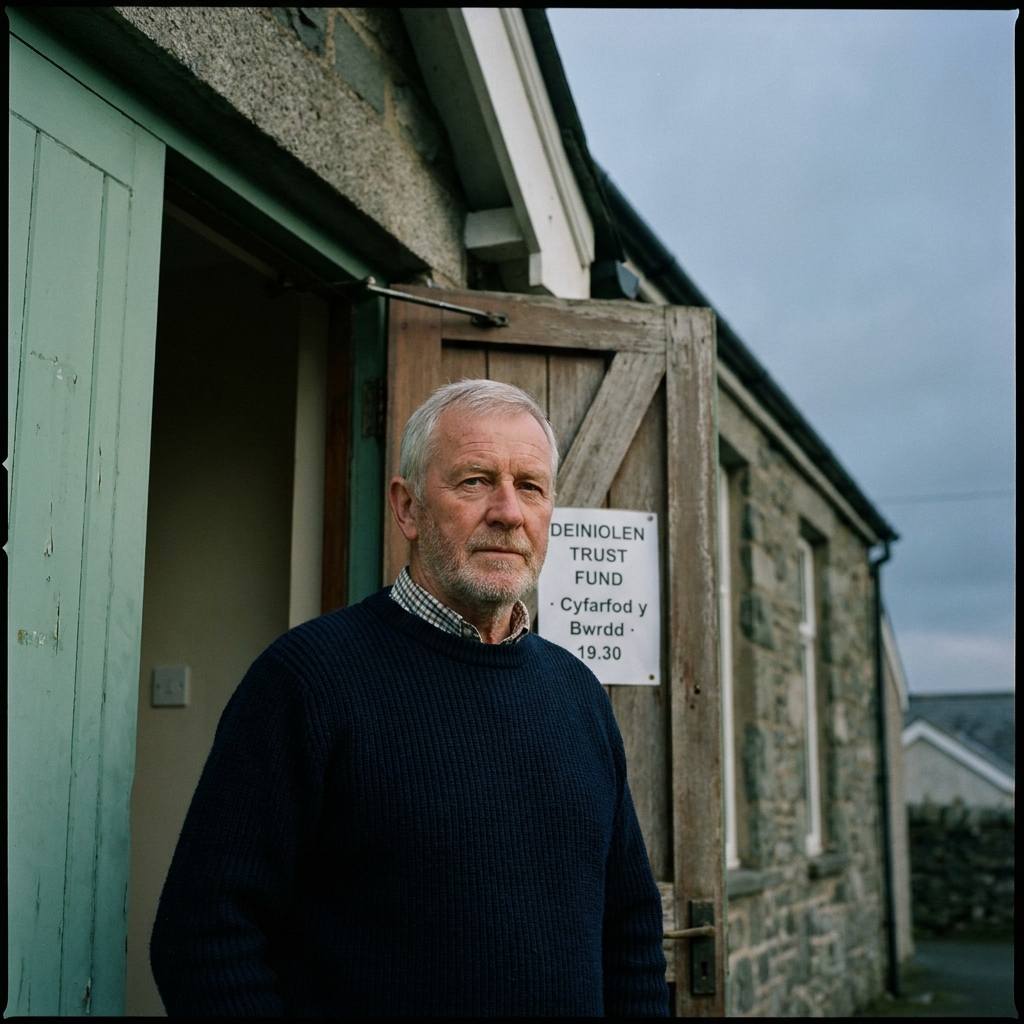
Carries the village correspondence and chairs the January and July board meetings.
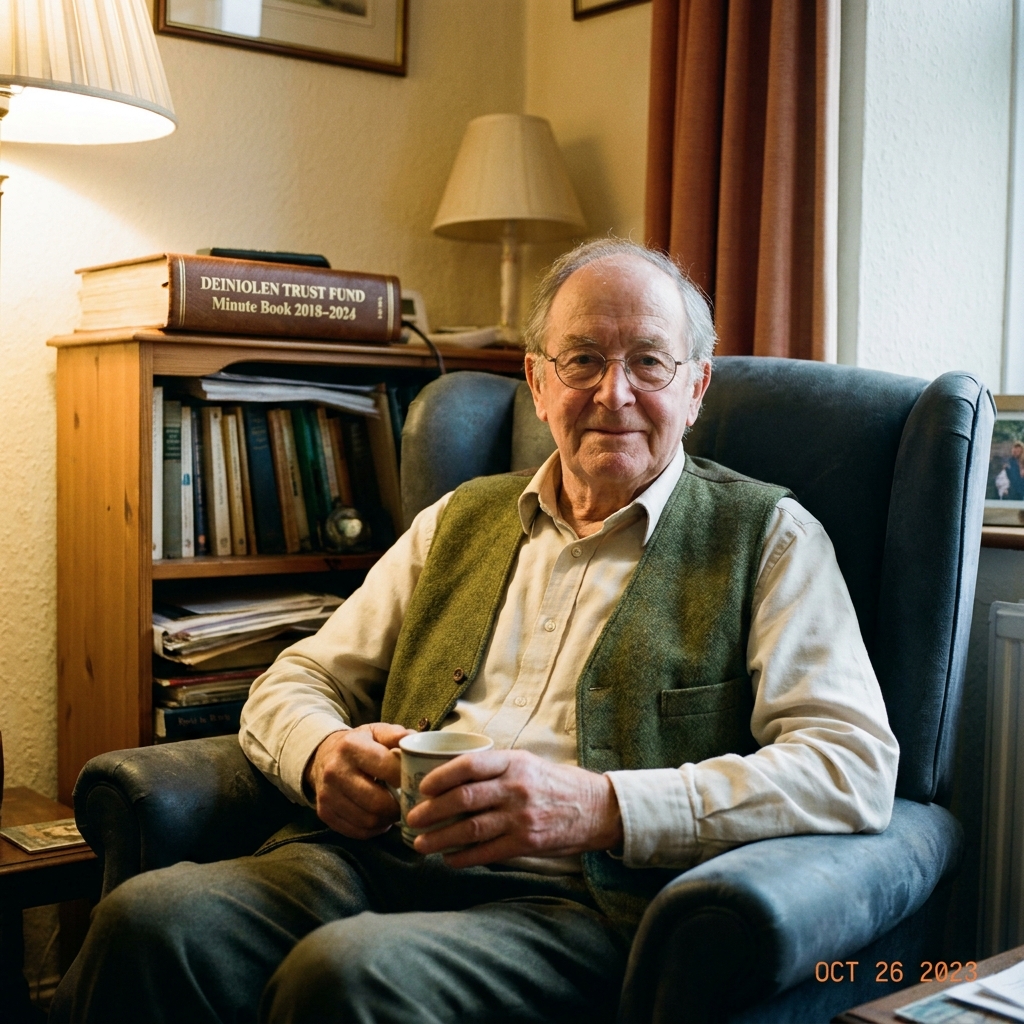
Keeps the books; files the annual return; signs the Memorial Hall bank slips.
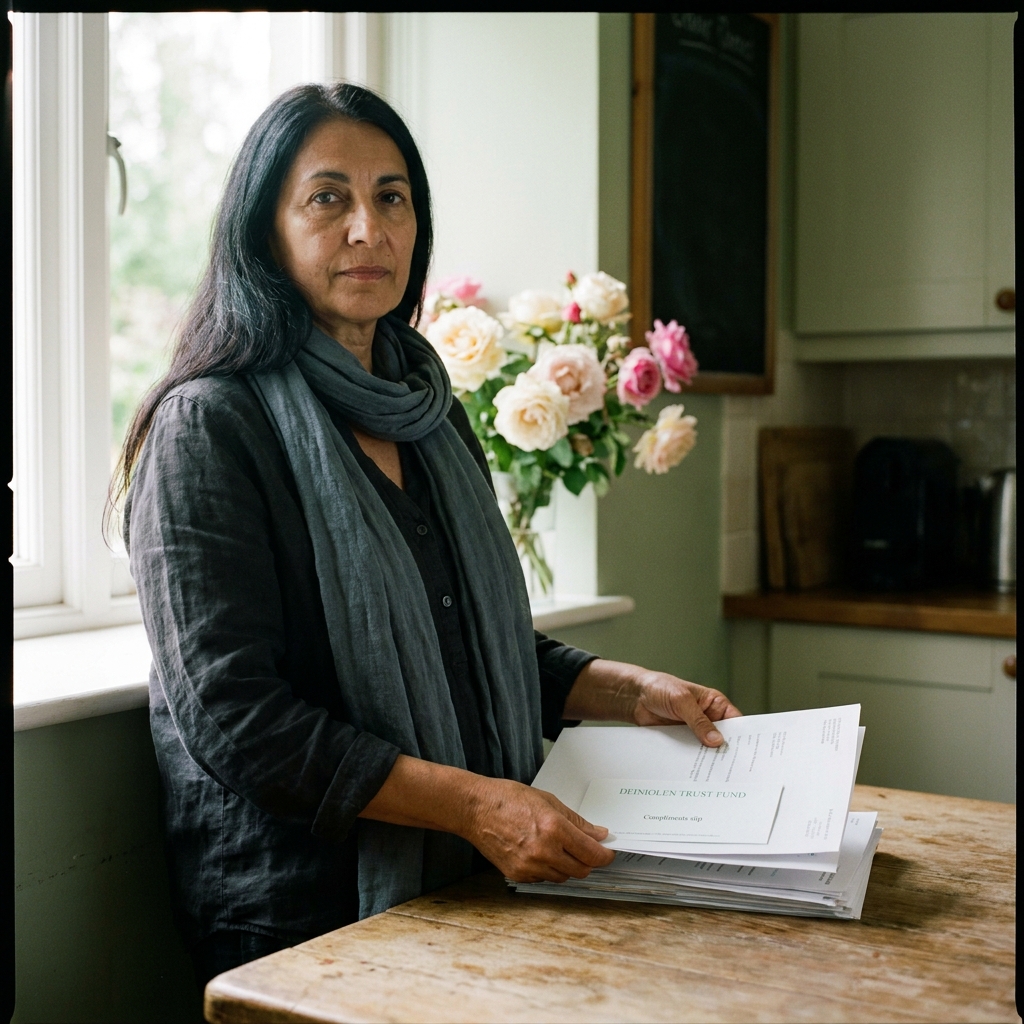
Takes the post at 9 Deiniol Road and replies to enquiries — by post when there is time, by email when not.
The Scheme of 22 May 1980 vests the trust in not fewer than four and not more than eight trustees, who serve at the pleasure of the village and may be replaced by the appointment of new trustees by the Charity Commission. In practice we have run as a four-trustee board for most of the trust’s history. Decisions on grant applications are taken by simple majority at one of the two annual board meetings, with one further reserve meeting in May if the post-bag is unusually full. Trustees may not vote on a matter in which they or an immediate family member have a personal interest; that is written into the minutes and respected without fuss.
We publish our annual return to the Charity Commission within the statutory deadline; we hold no investments other than the trust’s deposit account at HSBC, Caernarfon branch; and we keep no reserves above the small operating buffer the Scheme allows. All correspondence is held for seven years for Gift Aid purposes and then destroyed.
For the year ending 31 December 2025: total income £3,104, total expenditure £3,104, closing balance unchanged. We hold no investment portfolio. We employ no staff. We pay no trustee. The full annual returns from 2018 onward are available on the annual reports page; earlier years are on the Charity Commission register at register-of-charities.charitycommission.gov.uk/charity-search/-/charity-details/219993.
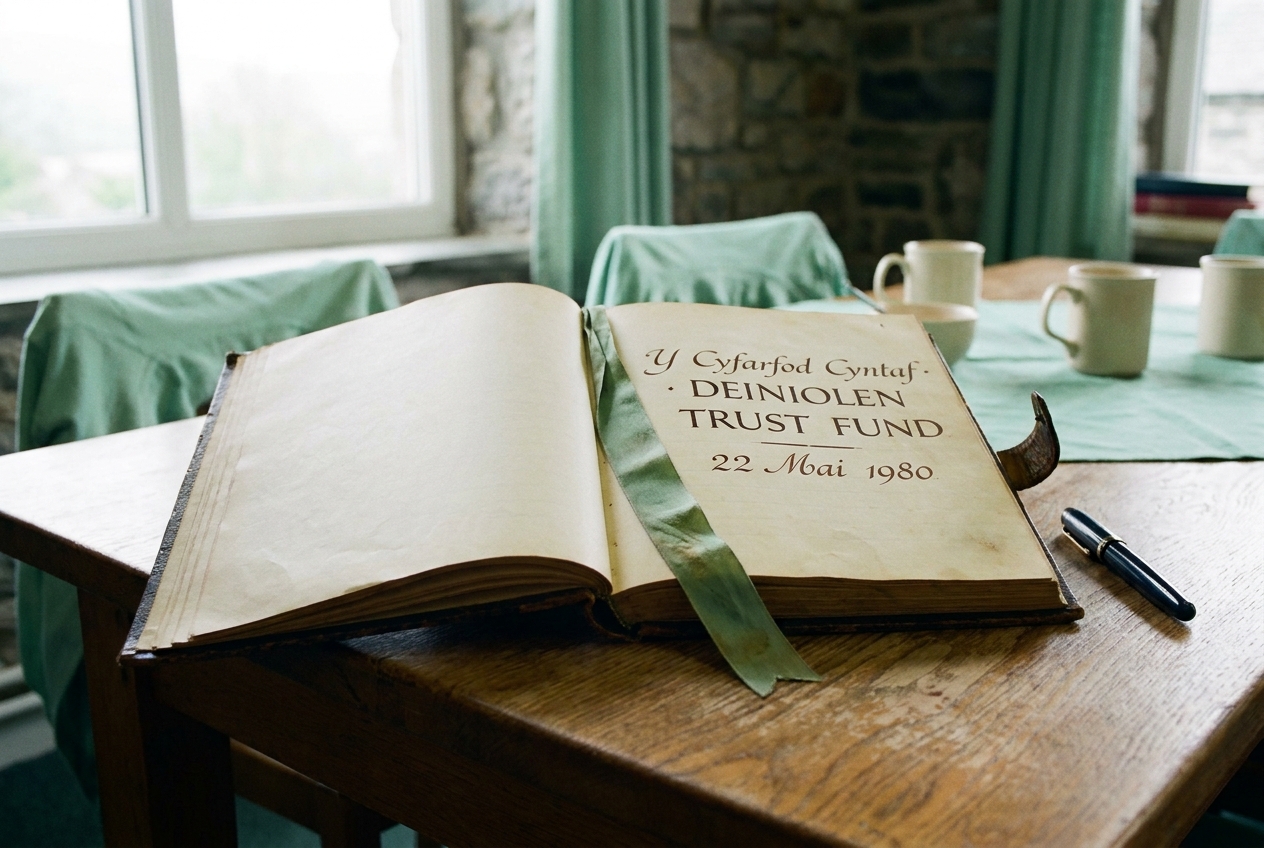
The trust’s first minute book is hand-bound in dark cloth, ruled in blue, and held in the back room of the Memorial Hall in a steel filing cabinet that has been there since 1989. The first entry is dated 22 May 1980, the day the Charity Commission Scheme was sealed. Four signatures sit at the foot of the page in copperplate fountain-pen ink. The opening minute, in Welsh, reads simply: Y Pedwar Cyntaf wedi cyfarfod. Diolch i Eglwys Sant Deiniol am yr ystafell, ac i Mrs Eleanor Pritchard am y te.
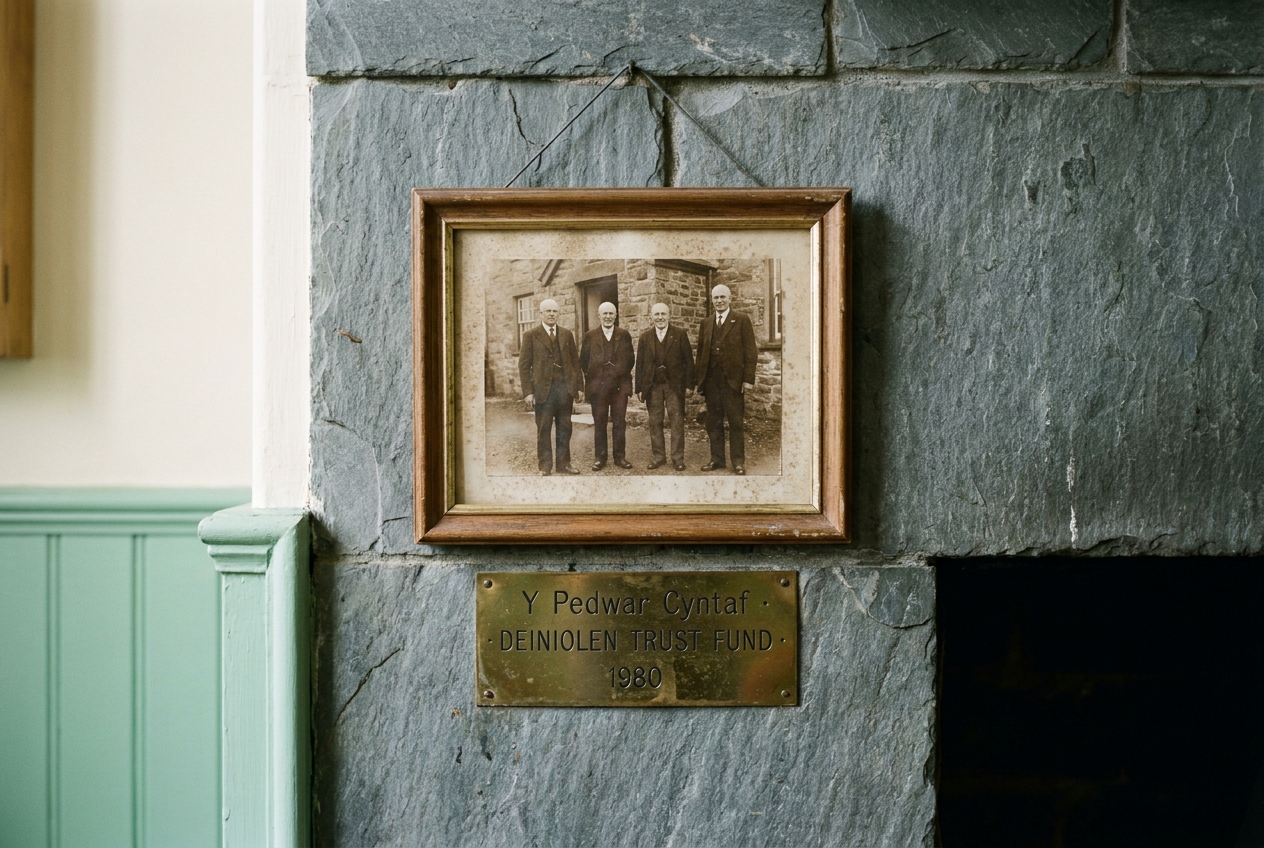
The four founding trustees — three men and one woman, all in their fifties or sixties at the time — sat at a small oak table in the side room of the Memorial Hall. Mrs Pritchard, who took the minutes and brought the tea, was not herself a trustee, but her name appears in nearly every entry of the first decade. The four of them were tasked, by the Scheme, with consolidating three older village funds into a single trust: the Capel Bethel Poor’s Fund (founded 1869), the Dinorwig Quarrymen’s Welfare (1923), and a small reading-room legacy (1947). Each had its own minute book; each had run out of money for slightly different reasons.
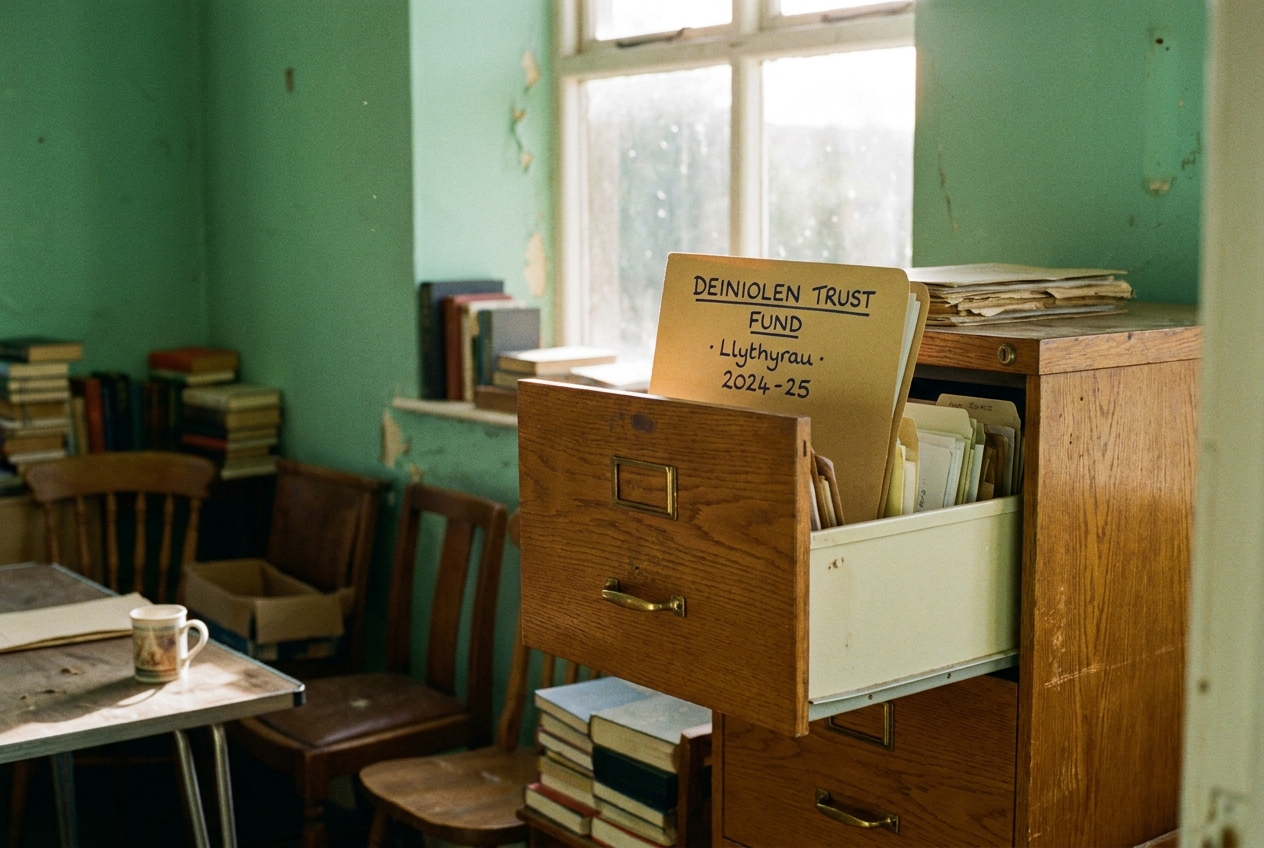
The trust does not have an office, but it has a steel four-drawer filing cabinet in the back room of the Memorial Hall, locked with a key that hangs on a brass hook in the kitchen at 9 Deiniol Road. The cabinet holds, in order, the running minute book (third volume, 2018 onwards), the seven-year roll of grant applications and Gift Aid declarations (the legally required retention), the original 1980 Scheme and the three older minute books from which the Scheme was made, and a single buff folder of correspondence about the website (added 2024). Every spring, the treasurer takes a Saturday afternoon to put the cabinet in order.
The trust’s annual general meeting is held on the second Saturday of November at the Memorial Hall. It is open to any village resident; about a dozen people attend in a normal year, including the four trustees, two volunteer readers, the treasurer of the football club, the headteacher of Ysgol Gwaun Gynfi (or a deputy), and the minister of Capel Bethel. The agenda is the same every year: minutes of the previous AGM, treasurer’s report, four trustees’ reports (one per programme), any other business, the date of the next AGM, tea. The whole thing takes about an hour and ten minutes; it has not, in living memory, run over.
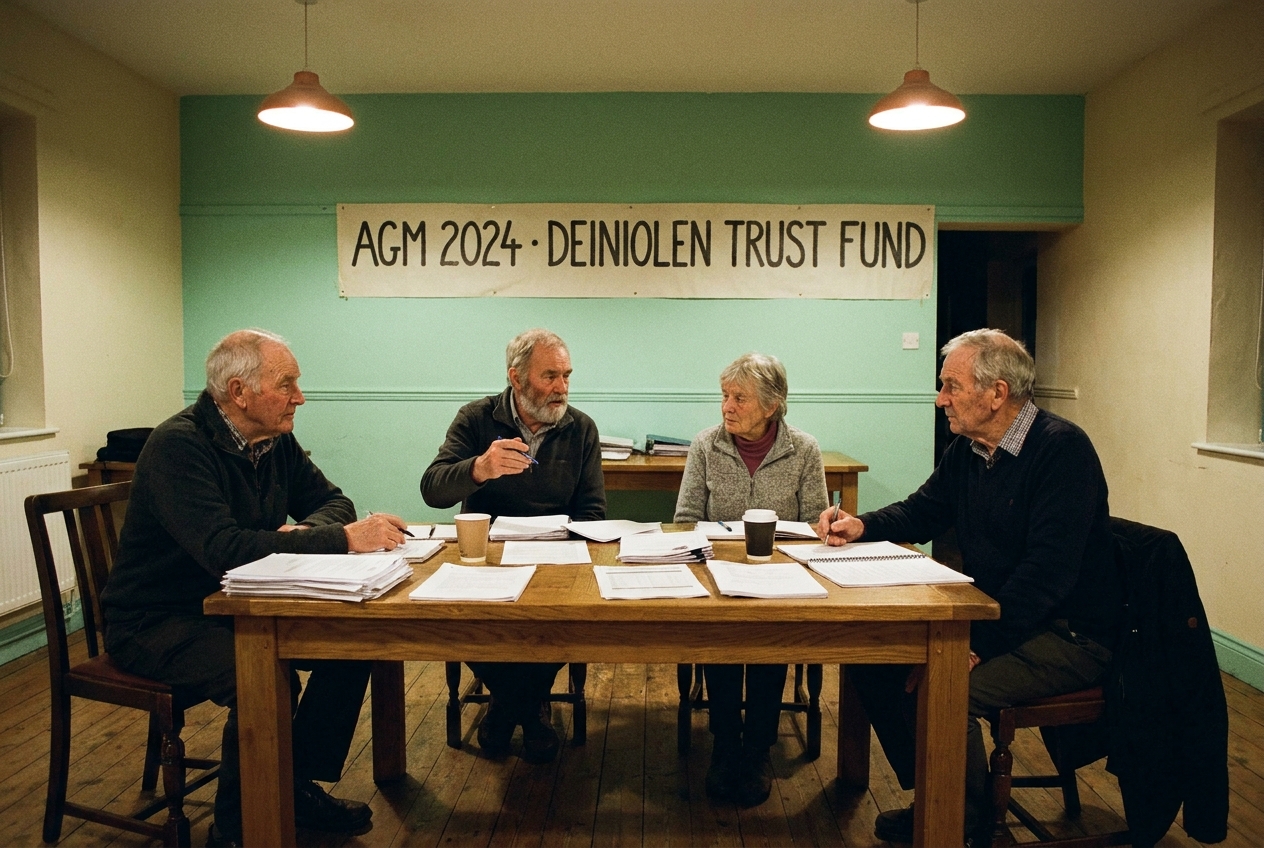
The Scheme is two pages long. The minute book is forty-three volumes deep, and counting. From the November 2024 AGM minutes
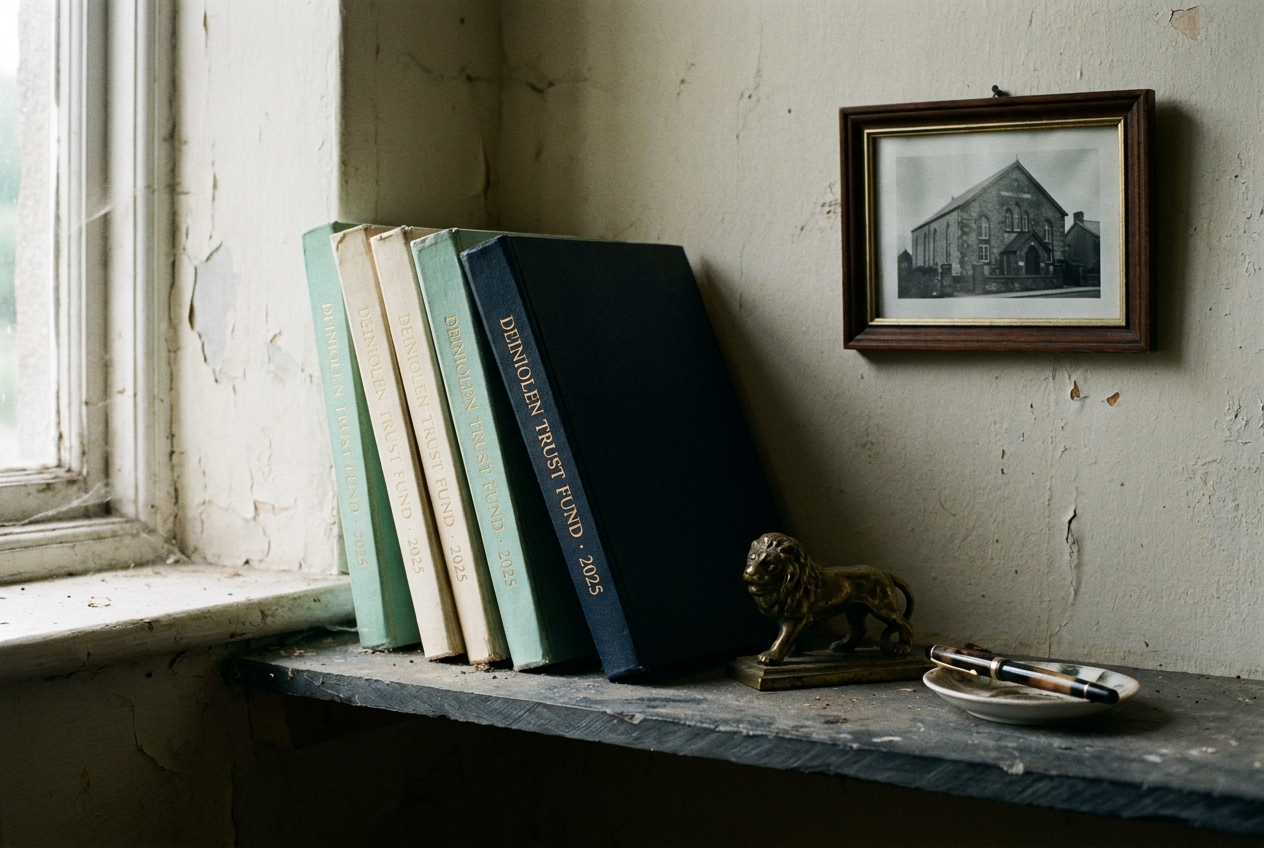
The Charity Commission Scheme of 22 May 1980 is the trust’s constitution. We keep three copies: the original on parchment in the locked drawer at the Memorial Hall; a photocopy in the trustees’ correspondence folder; and a digital copy on the secretary’s laptop, taken in 2024 for upload to the Commission’s system. The original is not laminated; it has yellowed gently around the edges; it bears the dry-stamp of the Commission in the lower-left. We re-read it at the January meeting each year, and we have not yet found a reason to seek a Scheme amendment.