Listen first. Give modestly. Stay in Deiniolen.
Our mission is the working out, in plain Welsh and plain English, of a Charity Commission Scheme written in 1980. This page sets out the four kinds of help the Scheme allows us to give, the values that decide how we give them, and one paragraph about what we cannot do.
Three small steps, in the order we take them.
We are not running a campaign and we are not measuring outcomes against a logic model. The theory of change for a village trust this size is, in truth, a flow-chart of three rectangles. We have drawn it below because the volunteers find it useful when they read the letters that come in.
A letter arrives in Deiniolen.
Posted to 9 Deiniol Road, or emailed to [email protected]. We read it the same week and acknowledge it within seven working days.
The four trustees meet.
Twice a year as standard; once more if the post-bag is full. We sort each letter into one of the four programmes and decide what — if anything — is the right small amount to give.
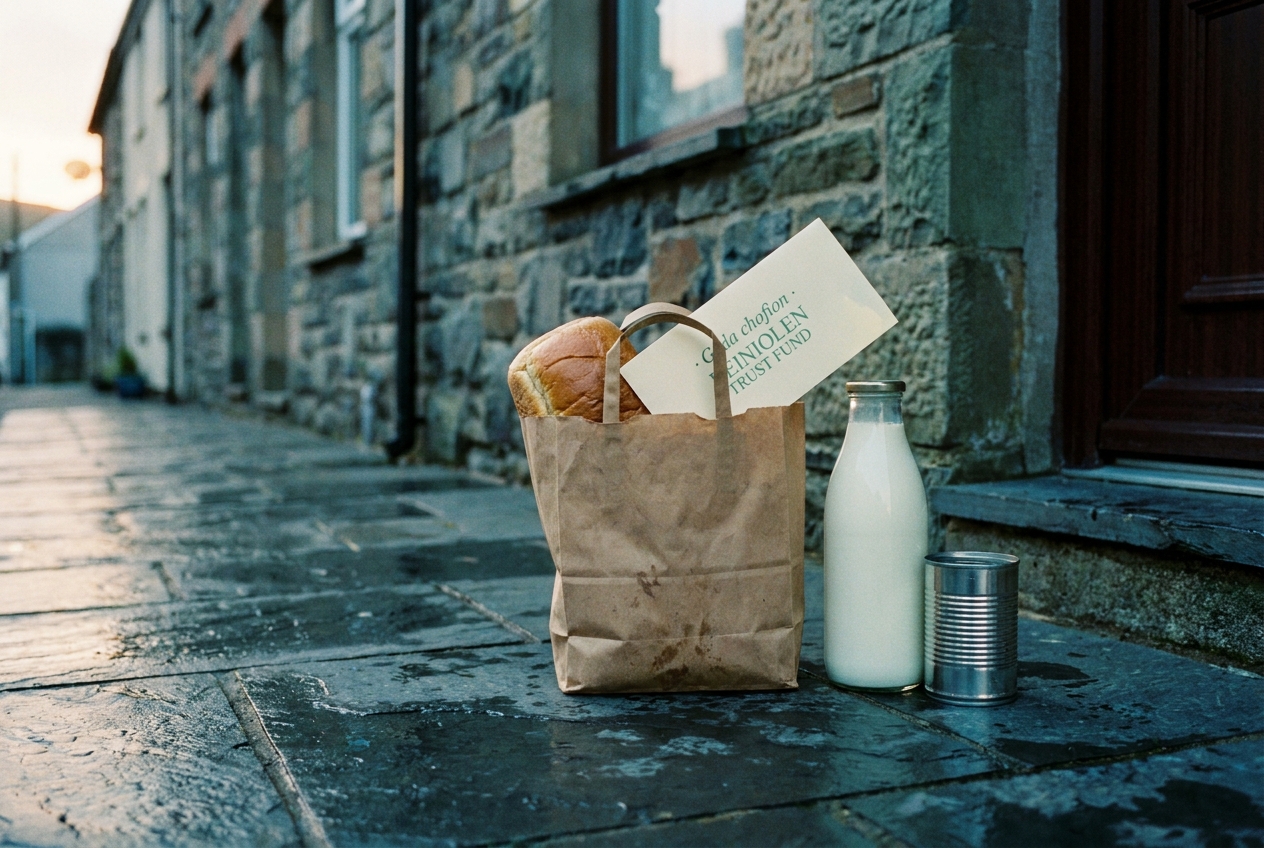
A cheque or a small bag.
The grant goes out by post — or, in the case of Llaw i’r Aelwyd, sometimes by hand. We do not ask for a receipt; we ask only that the village uses the grant the way the letter said it would.
Six things we have learned by doing this for forty-six years.
1. Listen before you give.
A grant given on autopilot is a grant given to the wrong person at the right moment. Every application is read in full by at least two trustees before a decision is taken; the trustees who know the applicant personally will say so at the meeting and abstain from the vote.
2. Modest sums are not a failure.
A grant of £40 for a child’s set text matters as much, on its day, as a grant of £400 to a community building. We do not aspire to grow our budget; we aspire to be helpful inside the budget we already have.
3. The village we serve has a name.
The Scheme of 1980 names a single village — Deiniolen. We do not give to the next valley over; we do not give in Llanberis or Caernarfon unless a Deiniolen child is the immediate beneficiary. This is a feature, not a constraint.
4. Welsh is not a translation.
The village we serve does most of its living, dying, schooling and singing in Welsh. Our application forms are in Cymraeg as standard. Our annual report is printed bilingually. Our trustees can take a letter, a phone call, or a kitchen-table conversation in either language.
5. No is a kind answer.
We refuse roughly one in five applications. We say no by letter, in plain language, with a short reason and, where we can, the name of another organisation that may be a better fit. A refusal does not affect future applications; we have written second yes-letters to people we said no to first.
6. We keep the trust small on purpose.
We could grow. We could employ an administrator, take on a marketing volunteer, run a campaign at Sŵn Festival, write to alumni in Caernarfon for monthly gifts. We choose not to. A larger trust would not be a better one for this village; it would be a different one.
Yn onest · An honest paragraphOne paragraph about what we cannot do.
This is the paragraph we owe you, and we have hidden it neither at the back of the website nor in a footnote on the Annual Report. DEINIOLEN TRUST FUND cannot meet substantial need. Our total annual income, in a normal year, is about three thousand one hundred pounds. We cannot fund a building project. We cannot pay a salary. We cannot replace statutory help from Cyngor Gwynedd, the NHS, Universal Credit, or the food bank in Bangor — and the four of us would not pretend otherwise. We have, more than once, written a careful letter explaining that an application would be better directed elsewhere, and we have sometimes been wrong to do so. In 2022 we declined a request for help with funeral costs that we should, with hindsight, have part-funded; in 2017 we agreed a grant for a village project that did not in the end happen, and we did not chase for the money back. Both episodes are written into our minutes. Both are reasons we say listen first at the top of this page.
What we hope this trust looks like in 2030.
Almost exactly the same as it does now. Four trustees, one bank account, two board meetings a year, an income somewhere between £2,800 and £4,200, a small carry of applications between meetings, and an unbroken record of returns to the Charity Commission. A trust that looks the same in 2030 as in 2025 is a trust that is doing its job well. If anything changes, we hope it will be the number of grants we make under Lle i Ddysgu — the Welsh-language secondary curriculum at Ysgol Brynrefail is something we would happily quadruple our giving toward, if the giving came in.
The village does not need this trust to be larger. It needs it to still be here. Minutes of the July 2024 board meeting
Listening, in detail.
The trust’s first value — listen before you give — is easy to put on a poster and harder to do in the post bag of a small charity. What it looks like in practice is the following sequence, in roughly this order: a letter arrives; one trustee reads it the same week; that trustee writes a short acknowledgement by return; the letter goes into the buff folder for the next meeting; the four trustees read it together over tea; if the applicant is known personally to a trustee, that trustee says so and the other three lead the discussion; a decision is taken; one trustee writes the reply, in the language of the original.
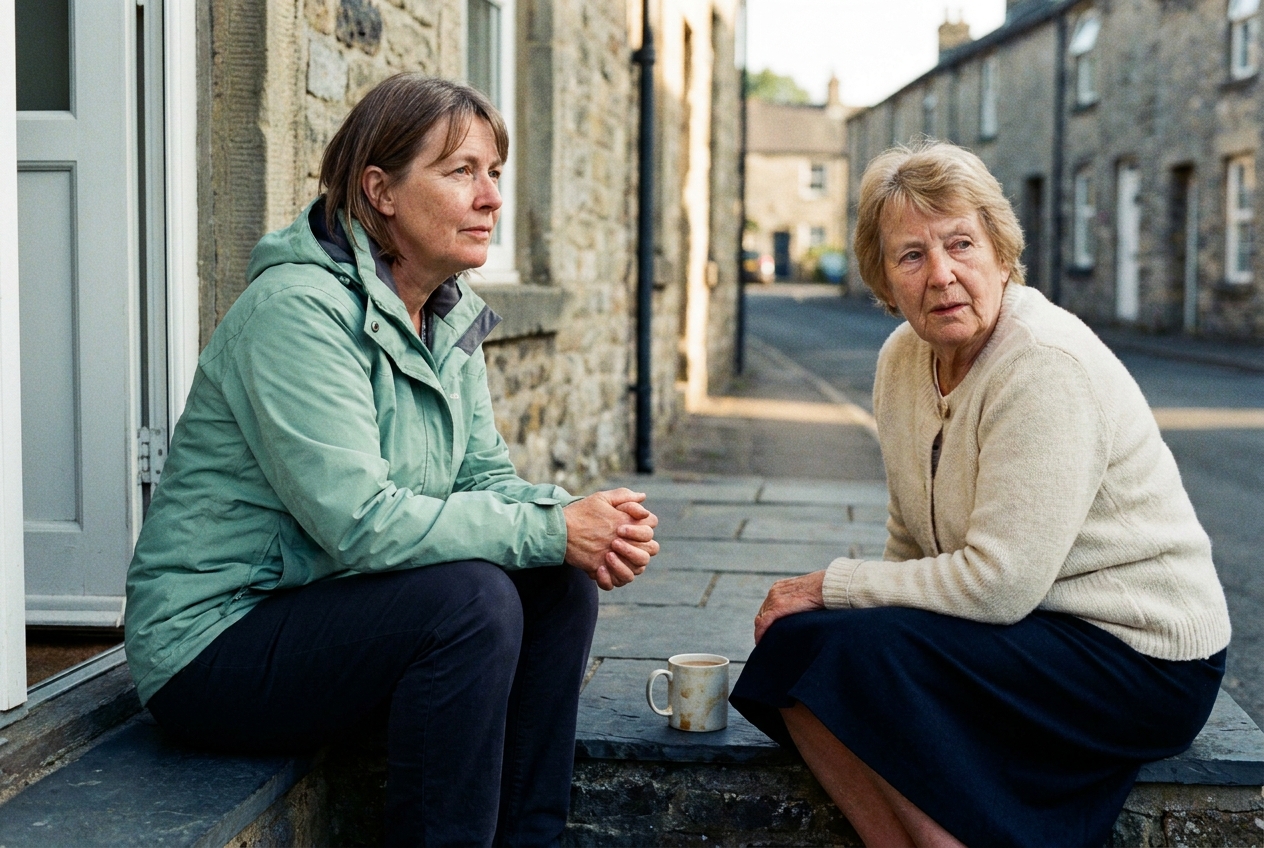
None of this is sophisticated. None of it requires a database. The whole apparatus could be replaced by a polite Christmas card and a part-time administrator, and we would be sorry to lose it. There is a particular kind of listening that a four-person, kitchen-table charity can do which a larger organisation cannot, and we are not interested in scaling out of it.
A short paragraph about refusals.
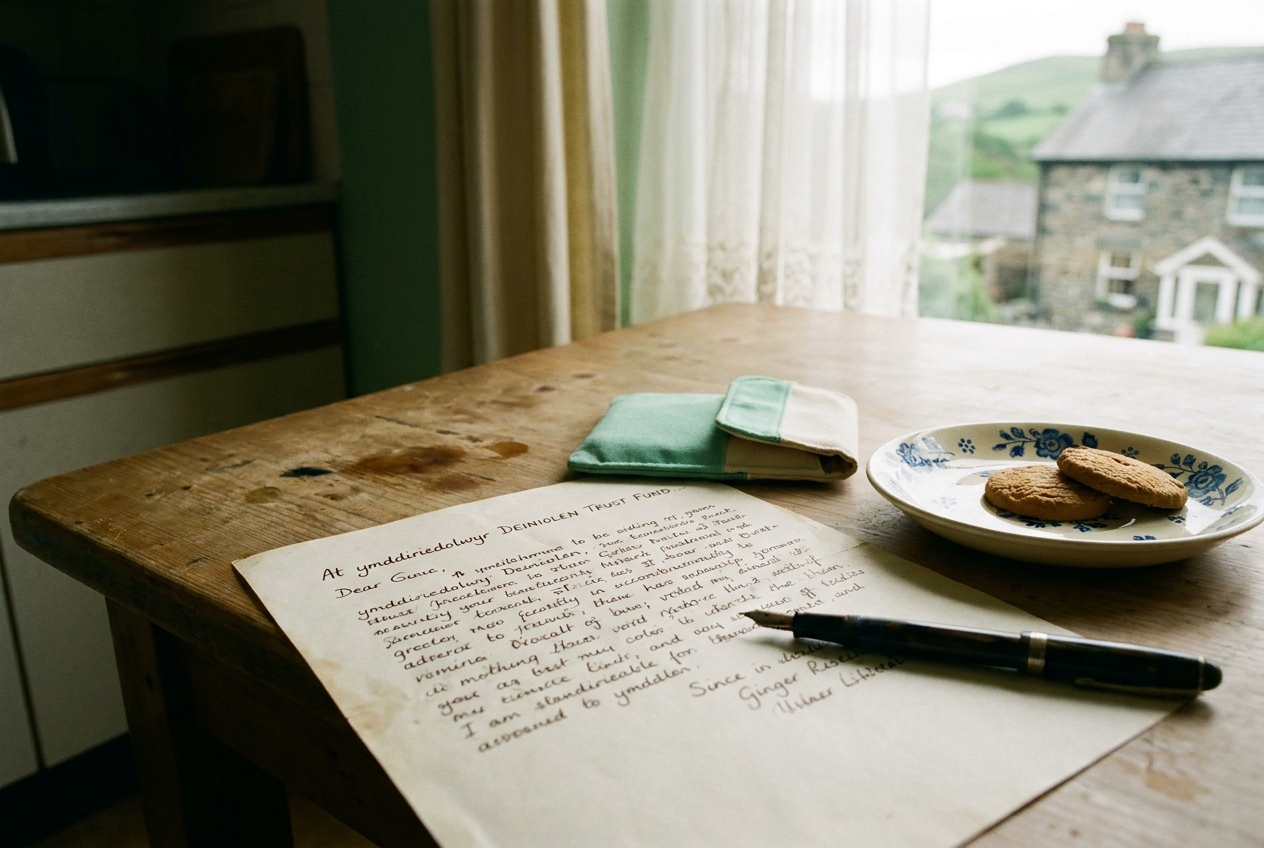
We say no to roughly one in five applications. The reasons vary: an applicant is outside the area of benefit (most common); the request is too large for our annual income; the work is properly the responsibility of a statutory body. We write every refusal letter ourselves, in the language of the application, and we suggest at least one other body that might be a better fit. We have, sometimes, said no to applications we should have said yes to; we have written about one such case openly in the paragraph above. The refusal letter we are most often re-reading is the one we wrote in 2022 about funeral costs, in which we declined a contribution we should have approved.
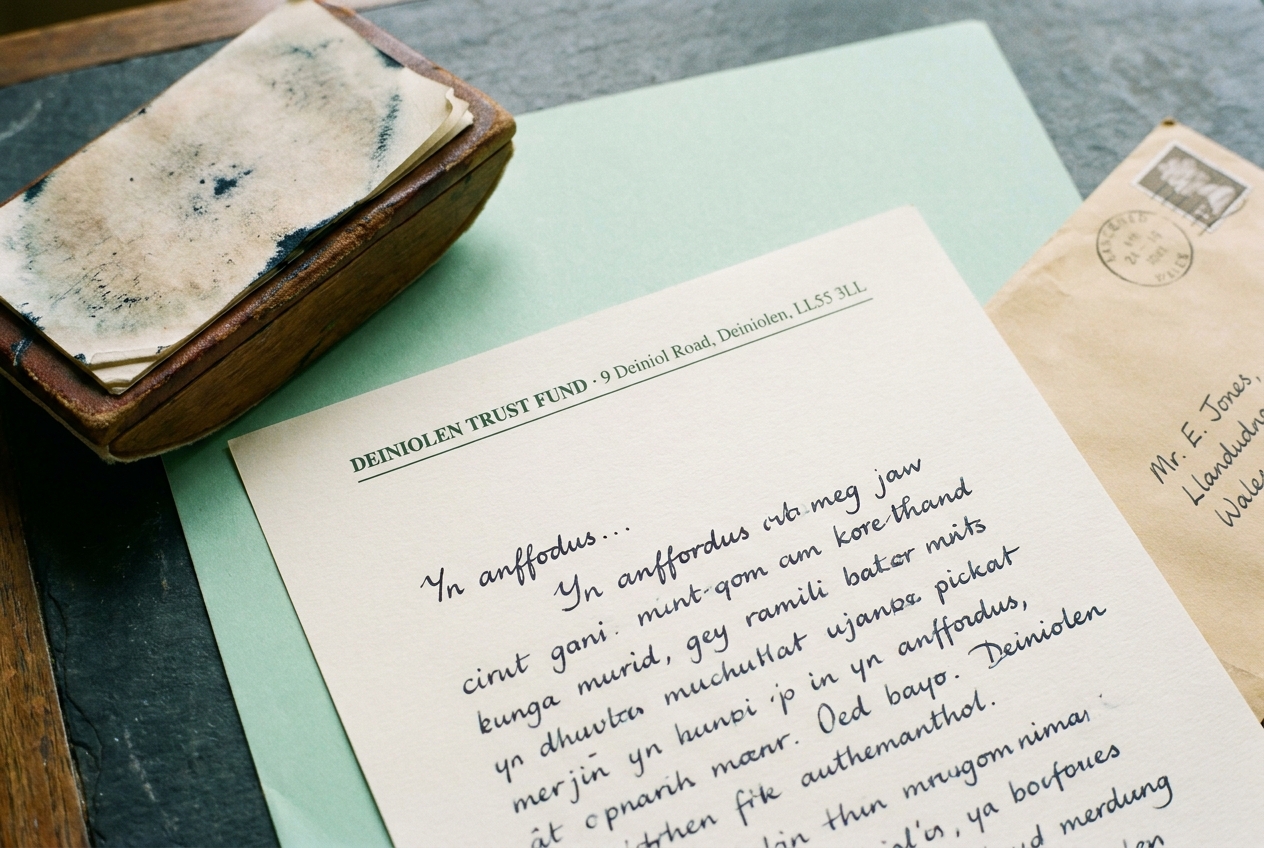
The annual rhythm, on the kitchen calendar.
The trust runs on a calendar of four fixed points in the year: the January board meeting (third Tuesday), the May reserve meeting (only if the post bag warrants it), the July board meeting (second Tuesday), and the November AGM (second Saturday). All four are noted, in red ink, on a small wall calendar in Marina’s kitchen at 9 Deiniol Road. Around those four points the post comes in, applications are read, replies are written, cheques are posted, and the small business of the year happens. There is no other rhythm; there has not been since 1980.
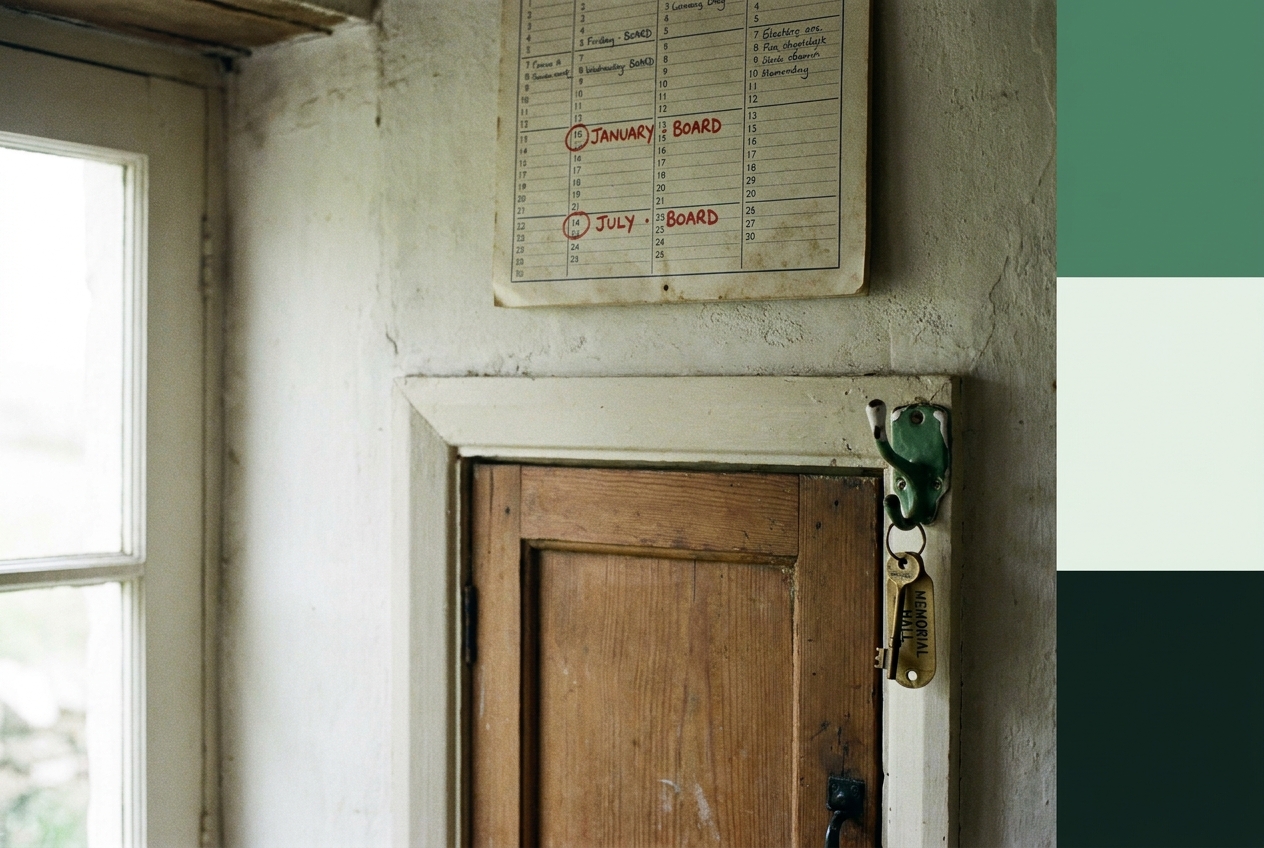
Four meetings a year is enough. A fifth would be ambitious; a sixth would be vanity. From the July 2023 board minutes