Hywel died on the second of November, after a short illness that nobody, including Hywel, had expected to be the last one. He had worked the Dinorwig quarry from the early sixties to its closure in 1969 and afterwards, with the long patient stubbornness of the men of that generation, the maintenance crew at the Padarn railway. Eleri had married him in 1973. They had not lived a day apart from each other since.
The boiler in the front room went out on the eighth of November. Eleri did not notice for two days. The chapel rota of meals that the village had quietly organised for her after the funeral was still running. Beti Williams brought a casserole on the Wednesday and found that the kitchen tap had ice on the inside of its spout. She went home and rang Marina. By the time Marina arrived on the Tuesday afternoon following, with a fuel-card application in her bag, Eleri had been wearing two cardigans and a coat indoors for six days.
They sat with us at the kitchen table — that was the whole of it. Nobody asked me to prove anything. Brian had known Hywel since the quarry. Eleri, 71, Deiniolen
What the grant was for, and what it was not for.
The grant the trustees agreed that Tuesday evening was £120 — eighty pounds to the British Gas top-up card, forty pounds in cash for the immediate week. It was not, in any meaningful sense, going to solve the problem of an empty terrace through a Gwynedd winter. We did not pretend that it was. The British Gas top-up bought a fortnight of central heating. The forty pounds bought a delivery of solid fuel for the back-room fire and a pair of warmer slippers from the chemist on Stryd y Llan in Caernarfon.
What the grant was, in truth, was a gesture in the right direction at the right speed. The chapel rota and the village WhatsApp group — neither of which the trust has anything to do with — did most of the actual work. Beti Williams kept turning up with casseroles. Sera, the district nurse, called once a week. Glyn checked the bin was at the gate on a Sunday evening. The trust’s £120 was a small piece of paper that said, in effect: we have heard you, the four of us, and we have not waited for the next quarterly meeting.
The mistake we did not make, and the one we did.
The mistake we did not make was to means-test. We have never means-tested a Llaw i’r Aelwyd grant in forty-six years and we have no intention of starting. Means-testing requires you to look an older neighbour in the eye and ask her for her bank statements; it would do more harm in a single afternoon than the small sums we give would ever undo.
The mistake we did make was to assume, when Marina visited, that the boiler issue was the only one. It was not. Eleri had not been eating in any consistent way since the funeral; the fridge had three eggs and a half-pint of milk in it on the Tuesday. We were slow to notice that. The casserole rota had been, in fact, the only thing keeping her fed. We have started telling each other, since, to look in the fridge when we visit. It is a small thing to learn at the age the four trustees are now.
What happened next.
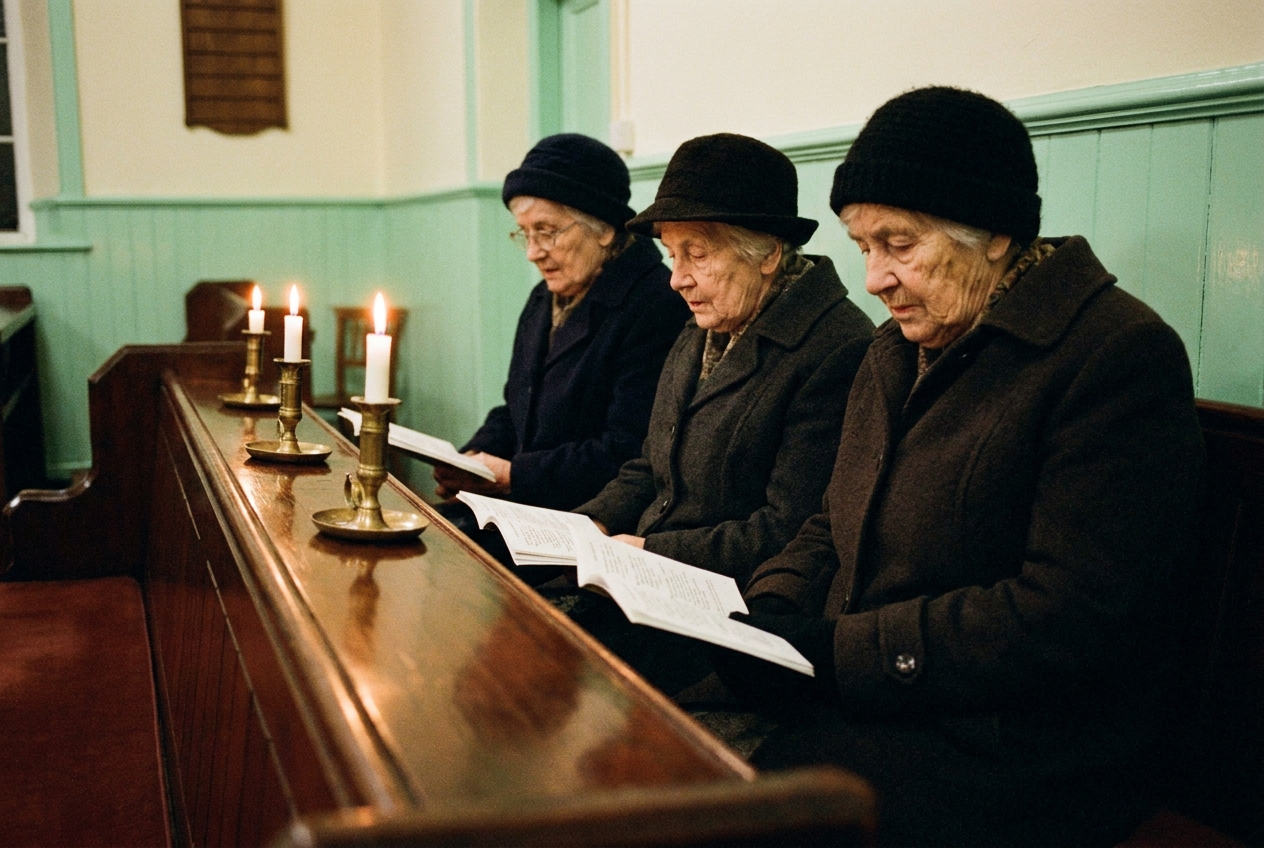
Eleri was at the village carol service at Capel Bethel on the nineteenth of December, in a black coat, sitting with Beti and Sera in the back pew. She came up to Brian afterwards and asked him whether the trust would help with a small thing in the new year — a card to be printed for Hywel’s first anniversary, to send to the men who had worked with him at the quarry. The card was forty pounds. We had it printed at the village stationer in Llanberis. Twenty-three were posted, and replies came back from twelve.
The £120 grant, in the way these things go, will sit in the column of the 2024 accounts and not be remembered by anyone except the four of us and Eleri. That is, on balance, the right outcome for a charity our size. We do not need to remember every grant; we need only to be ready to make the next one.
Names used with permission. Marina Marzelos is a Trustee of DEINIOLEN TRUST FUND.